What Is a VPS Server?
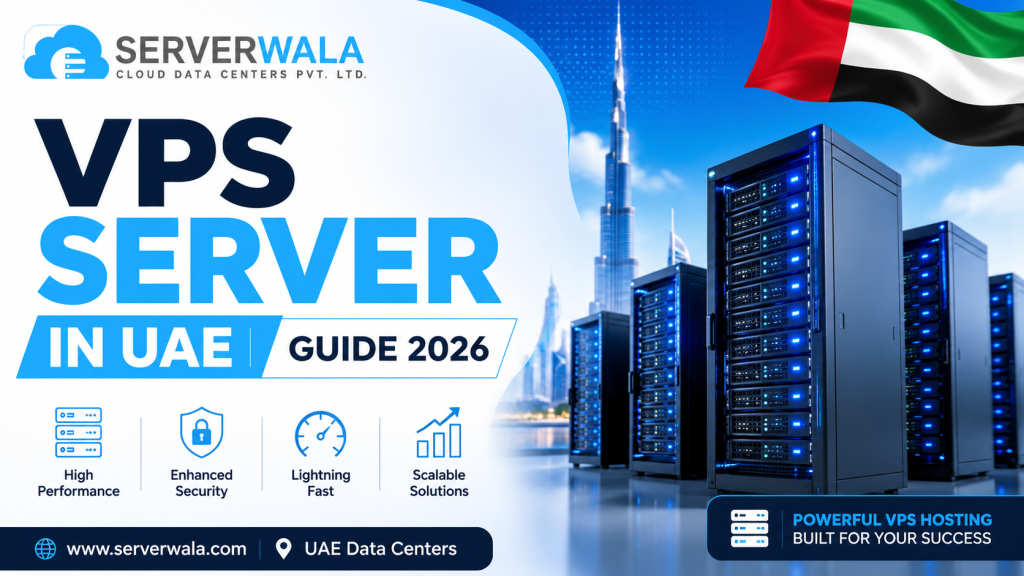
A VPS Server is a powerful web hosting solution that uses virtualization technology to divide a physical server into multiple independent virtual servers. Each VPS provides dedicated CPU, RAM, storage, bandwidth, and operating system resources. These ensures reliable performance, enhanced security, and greater flexibility compared to shared hosting. Whether you run an eCommerce website, business application, SaaS platform, or corporate website. A VPS Server UAE offers the resources needed to maintain consistent speed and uptime even during traffic spikes. Hosting your website on a Virtual Private Server in the UAE also helps reduce latency for visitors across Dubai, Abu Dhabi, Sharjah, Ajman, Ras Al Khaimah, Fujairah, Umm Al Quwain, and other GCC countries. These Countries delivering a faster responsive user experience. Businesses looking for scalable, secure, and high-performance hosting often choose VPS Hosting UAE as a cost-effective alternative to shared hosting.
Why This Guide Matters
Selecting the right VPS Server in the UAE is one of the most important decisions for businesses that rely on their online presence. Whether you operate a startup in Dubai, an eCommerce business in Abu Dhabi, a software company in Sharjah, or serve customers across the UAE and GCC region, your hosting environment directly impacts website speed, security, uptime, customer experience, and search engine visibility. With numerous providers offering different server specifications, virtualization technologies, and pricing models, choosing the ideal Virtual Private Server can be challenging. This comprehensive guide simplifies the process by explaining every aspect of hosting in UAE, from understanding how VPS technology works to selecting the right server configuration for your business. It also addresses common hosting problems, compares VPS with other hosting solutions. It provides practical recommendations to help you invest in a reliable, scalable, and future-ready hosting solution.
Who Should Read This Guide?
This guide is designed for anyone searching for a VPS Server UAE to improve website performance, application hosting, or business operations. It is especially useful for startups, small and medium-sized enterprises (SMEs), large enterprises, online retailers, digital agencies, web developers, IT professionals, SaaS companies, educational institutions, healthcare providers, and financial organizations operating in Dubai, Abu Dhabi, Sharjah, Ajman, Fujairah, Ras Al Khaimah, Umm Al Quwain, and throughout the UAE. If your website experiences slow loading speeds, high traffic, security concerns, or frequent downtime, this guide will help you understand how a UAE VPS Hosting solution can address these challenges. Whether you’re hosting WordPress, WooCommerce, Magento, Laravel, ERP systems, databases, or custom applications, you’ll find practical insights to help you choose the right Virtual Private Server for your business needs.
What You’ll Learn
This guide provides everything you need to know before choosing a VPS Server in UAE. You’ll learn how Virtual Private Servers work, the advantages of VPS Hosting UAE, and the differences between VPS, shared hosting, dedicated servers, cloud hosting, and colocation services. You’ll also discover how UAE VPS Servers improve website speed, strengthen security, reduce downtime, enhance scalability, and support business growth across the UAE and GCC region. In addition, the guide covers server optimization, migration best practices, and backup strategies. These helps to improve performance monitoring, common hosting mistakes to avoid, and answers to frequently asked questions. By the end, you’ll have the knowledge to confidently choose a high-performance VPS Server in Dubai, Abu Dhabi, or anywhere in the UAE that delivers reliable performance, long-term value, and an exceptional experience for your customers.
Understanding VPS Servers: Everything You Need to Know
How Does a VPS Server Work?
Many website owners wonder why their website slows down even though they haven’t made any changes. In many cases, the issue is that shared hosting resources are being consumed by other websites on the same server. VPS Hosting solves this by dividing a physical server into multiple isolated environments using virtualization technology. Each environment has its own dedicated resources, operating system, and applications, ensuring that one user’s traffic or resource usage does not impact another. This isolation helps maintain consistent performance, making it easier to handle growing visitor numbers and business applications.
Virtualization Explained
One of the biggest misconceptions is that every website needs its own physical server to achieve reliable performance. Virtualization eliminates that requirement by allowing multiple independent server environments to run securely on a single physical machine. Each environment behaves like its own server while sharing hardware efficiently, reducing costs without compromising stability. This technology enables businesses to benefit from dedicated resources, faster deployment, and simplified scalability while avoiding the expense of purchasing and maintaining physical hardware.
Hypervisors (KVM, VMware, Hyper-V, OpenVZ)
Not all virtualization platforms deliver the same level of performance, security, or flexibility. A hypervisor is the software responsible for creating and managing virtual machines while ensuring that each environment receives its allocated resources. KVM is known for strong isolation and near-native performance, making it suitable for demanding workloads. VMware offers enterprise-grade management features for large organizations, while Hyper-V is commonly used in Windows-based infrastructures. OpenVZ is a lightweight option that shares the Linux kernel among containers, making it efficient for specific Linux hosting scenarios. Choosing the right hypervisor depends on your operating system, workload, scalability requirements, and management preferences.
Physical Server vs Virtual Server
A common concern among businesses is whether they need to invest in an expensive physical server to achieve high performance. In many cases, the answer is no. A Virtual Server provides many of the advantages of dedicated hardware, including isolated resources and administrative control. It is without requiring businesses to purchase, maintain, and upgrade physical equipment. While physical servers remain suitable for organizations with very specific performance or compliance requirements. This virtualized hosting is often a more practical and cost-effective option for startups, SMEs, developers, and growing enterprises.
VPS Architecture
Many users assume that hosting is simply a matter of uploading files to a server, but there is much more happening behind the scenes. The architecture of a Virtual Private Server begins with powerful physical hardware that provides processing power, memory, storage, and networking. A hypervisor then creates multiple isolated virtual environments, each functioning independently with its own operating system and applications. This layered architecture ensures better resource utilization, improved security, and consistent performance, allowing businesses to run websites and applications without interference from neighboring users.
Components of a VPS
When selecting a hosting plan, many people focus only on storage or price, overlooking the components that truly affect performance. A Virtual Private Server combines several key elements, including CPU cores for processing, RAM for multitasking, SSD or NVMe storage for faster data access, bandwidth for handling visitor traffic, and an operating system such as Linux or Windows. Additional features like firewalls, backups, control panels, dedicated IP addresses, and monitoring tools further improve security and management. Understanding these components helps businesses choose a configuration that matches their current needs while leaving room for future growth.
Why Businesses in the UAE Choose VPS Servers
The UAE has become one of the fastest-growing digital economies in the Middle East, with businesses increasingly relying on websites, eCommerce platforms, cloud applications, and digital services to reach customers. As online competition continues to grow, organizations need hosting solutions that offer reliable performance, enhanced security, and the flexibility. These things helps to scale with business demands. A Virtual Private Server provides dedicated resources and greater control than shared hosting, making it a preferred choice for startups, SMEs, and large enterprises across Dubai, Abu Dhabi, Sharjah, and other Emirates. Whether you’re launching a new online business or upgrading an existing website, choosing the right hosting infrastructure plays a vital role in maintaining a strong online presence.
Digital Transformation in the UAE
The UAE government has actively promoted digital innovation through smart city initiatives, digital government services, and investments in advanced technologies. As a result, businesses across industries are adopting cloud-based platforms, online customer portals, mobile applications, and digital payment systems. These technologies require reliable hosting that can support increasing workloads without compromising performance. A scalable hosting environment allows organizations to adapt to changing business requirements while ensuring their digital services remain accessible and responsive.
Growing Online Businesses
From eCommerce stores and SaaS startups to educational platforms and professional service providers, online businesses in the UAE are growing rapidly. As websites attract more visitors, shared hosting often struggles to deliver consistent performance because resources are shared among multiple users. A hosting solution with dedicated resources enables businesses to handle higher traffic volumes, run multiple applications, and support future expansion without frequent service interruptions. This makes it easier to maintain a professional online presence while meeting customer expectations.
Faster Website Performance
A slow website is one of the most common reasons visitors leave without completing a purchase or contacting a business. Delayed page loading can reduce customer satisfaction, increase bounce rates, and negatively affect search engine visibility. Hosting on a Virtual Server with dedicated CPU, RAM, and high-speed SSD or NVMe storage helps websites load more quickly and maintain stable performance during periods of high traffic. For businesses serving customers across the UAE and the GCC region, improved performance creates a smoother browsing experience and supports better business outcomes.
Better Customer Experience
Modern customers expect websites to load quickly, remain available around the clock, and provide a seamless browsing experience on every device. Frequent downtime, slow checkout pages, or application delays can reduce customer trust and lead to lost sales. A reliable hosting environment helps businesses deliver consistent performance, ensuring visitors can browse products, submit inquiries, or complete transactions without unnecessary interruptions. A positive user experience not only encourages repeat visits but also strengthens brand credibility and customer loyalty.
Business Scalability
Every growing business eventually reaches a point where its hosting needs increase. As website traffic grows, new services are launched, or additional applications are deployed, more computing resources become essential. Therefore, a Virtual Private Server allows businesses to upgrade CPU, RAM, storage, and bandwidth with minimal disruption. Additionally, this flexibility makes it easier to adapt to changing business demands. As a result, businesses can avoid costly hardware replacements and support long-term growth.
Local Hosting Advantages
Many businesses wonder whether hosting their website closer to their customers makes a difference. In most cases, the answer is yes. Hosting within the UAE can reduce network latency, improve page loading times for local visitors, and provide a better experience for customers in Dubai. Local hosting may also simplify compliance with regional business requirements, improve connectivity for nearby users. This helps organizations to deliver faster, more reliable digital services to their target audience.
Common Business Problems Solved by a Virtual Private Server
As a business grows, its website and applications begin to face challenges that shared hosting often cannot handle. Many business owners notice slower loading speeds, unexpected downtime, security concerns, or performance issues without understanding the root cause. These problems can affect customer trust, reduce sales, and even impact search engine rankings. A Virtual Private Server provides dedicated resources, greater control, and improved reliability, helping businesses overcome these challenges while preparing for future growth. Below are some of the most common problems and how they can be addressed.
Slow Website
Have you ever clicked on your own website and wondered, “Why is it taking so long to load?” You’re not alone. Slow websites frustrate visitors, increase bounce rates, and can reduce conversions. In many cases, the problem isn’t the website itself—it’s the hosting environment. On shared hosting, multiple websites compete for the same CPU, RAM, and storage resources. If another website experiences a traffic spike, your site’s performance may also suffer. Moving to a Virtual Private Server gives your website dedicated resources, allowing pages to load more consistently and providing visitors with a smoother browsing experience.
Website Crashes During Busy Hours
Many businesses only discover hosting limitations when their website receives more visitors than usual. A successful marketing campaign, seasonal sale, or viral social media post can suddenly increase traffic, causing the website to become slow or even unavailable. Customers who cannot access your website are likely to leave and choose a competitor instead. A scalable hosting environment is designed to handle higher traffic volumes more efficiently. It helps businesses stay online during important moments and reducing the risk of lost opportunities.
Shared Hosting Limitations
Shared hosting is often a good starting point for new websites, but it has its limits. Since multiple users share the same server resources, your website’s performance can be affected by activities outside your control. You may experience slower speeds, restricted software options, limited server settings, or resource usage limits as your business grows. Upgrading to a more flexible hosting environment provides greater independence, allowing businesses to customize their server, install required applications, and enjoy more predictable performance.
High Traffic Issues
Growth is exciting, but increased website traffic can create unexpected challenges. More visitors mean more requests to the server, and if your hosting plan isn’t designed to handle them, pages may become slow or unavailable. This is especially common for eCommerce stores during promotions or businesses launching new products. A Virtual Server can allocate dedicated resources and can often be upgraded as demand increases, helping businesses manage traffic more effectively without sacrificing website performance.
Poor Application Performance
Business applications such as ERP systems, CRM software, accounting platforms, and customer portals require stable computing resources to function efficiently. When these applications share limited resources with other users, employees may experience slow response times, delayed processing, or unexpected interruptions. A hosting solution with dedicated CPU, memory, and storage helps applications run more smoothly, improving productivity and providing employees and customers with a better overall experience.
Security Risks
Every business wants to protect its website, customer information, and business data from cyber threats. On shared hosting, a vulnerability affecting one website may increase risks for others sharing the same environment. While no hosting solution can guarantee complete protection, an isolated hosting environment offers better separation between users. It gives businesses greater control over firewalls, security settings, software updates, and access permissions. This additional control supports a stronger security strategy and helps reduce potential risks.
Lack of Control
As businesses grow, they often need to install custom software, configure server settings, or optimize applications for better performance. Shared hosting usually restricts many of these administrative tasks, making customization difficult. With a Virtual Private Server, businesses typically receive root or administrator access, allowing them to configure the server according to their specific requirements. This flexibility is particularly valuable for developers, software companies, and organizations running specialized applications.
Unexpected Downtime
Nothing is more frustrating than discovering your website is offline while potential customers are trying to contact you or place an order. Downtime not only affects sales but can also damage customer confidence and your brand’s reputation. A more reliable hosting environment with dedicated resources and improved infrastructure helps reduce unexpected interruptions, allowing businesses to provide consistent access to their websites and online services.
Resource Limitations
Many businesses begin with a hosting plan that meets their initial needs, only to find it struggling as traffic and workloads increase. Limited CPU, RAM, or storage can cause websites and applications to slow down, especially during busy periods. Rather than moving to an entirely new infrastructure, businesses can often increase resources within the same hosting environment,. It makes it easier to support growth without significant disruption.
Expensive Infrastructure
Purchasing and maintaining physical servers requires significant investment in hardware, networking equipment, cooling systems, electricity, maintenance, and technical expertise. For many small and medium-sized businesses, these costs are difficult to justify. A Virtual Private Server offers many of the benefits of dedicated infrastructure while eliminating the need to own and manage physical hardware. This allows businesses to access enterprise-grade performance in a more cost-effective and scalable way, making it easier to invest in growth without excessive infrastructure expenses.
Advantages of VPS Server Hosting in the UAE
Choosing the right hosting solution is about more than just keeping a website online. It directly affects your website’s speed, security, customer experience, and ability to grow with your business. As online competition in the UAE continues to increase, businesses need hosting that can handle growing traffic. It protect sensitive data, and deliver consistent performance without unnecessary interruptions. A Virtual Private Server combines dedicated resources, greater flexibility, and enterprise-level capabilities at an affordable cost, making it an excellent choice for startups, SMEs, eCommerce businesses.
Dedicated Resources
One of the biggest frustrations with shared hosting is that your website’s performance can be affected by other users on the same server. If another website suddenly consumes excessive CPU or memory, your website may become slow even though nothing has changed on your end. With dedicated resources, your business receives its own allocated CPU, RAM, storage, and bandwidth, ensuring more consistent performance. This allows websites and applications to operate smoothly without competing for critical server resources.
Better Performance
Visitors expect websites to load within seconds, and even a small delay can lead to lost customers. Slow-loading pages not only frustrate users but can also reduce search engine visibility and online sales. A Virtual Server delivers faster processing, improved response times, and stable performance by providing dedicated computing resources and high-speed SSD or NVMe storage. This creates a smoother browsing experience for visitors while supporting better website performance during both normal and busy periods.
Scalability
Every successful business grows over time, and your hosting solution should grow with it. Whether you’re launching a new product, expanding your online store, or attracting more visitors through marketing campaigns, your server requirements will eventually increase. Instead of migrating to completely new infrastructure, resources such as CPU, RAM, storage, and bandwidth can often be upgraded with minimal disruption. This flexibility allows businesses to adapt quickly without affecting daily operations.
High Availability
Customers expect your website to be available whenever they need it, regardless of the time of day. Unexpected outages can result in missed sales, lost inquiries, and reduced customer confidence. High availability is achieved through reliable infrastructure, redundant systems, and proactive monitoring that help minimize downtime. For businesses that rely heavily on online operations, maintaining consistent availability is essential for protecting revenue. It delivers a positive customer experience.
Root Access
As businesses grow, they often need greater control over their hosting environment. Developers may want to install custom software, configure server settings, optimize databases, or deploy specialized applications that aren’t supported on shared hosting. Root access gives administrators complete control over the server, allowing them to customize configurations, install preferred operating systems, manage security settings, and optimize performance according to their specific business requirements.
Better Security
Cybersecurity has become a major concern for businesses of all sizes. Data breaches, malware, and unauthorized access can damage customer trust and disrupt operations. A hosting environment with isolated resources provides better protection by separating your data and applications from other users on the same physical server. Combined with firewalls, regular updates, backups, access controls, and security monitoring, businesses can build a stronger defense against common online threats while maintaining compliance with industry best practices.
Cost Efficiency
Many businesses assume they need expensive dedicated hardware to achieve reliable performance, but that’s not always the case. Purchasing physical servers requires investment in hardware, maintenance, electricity, cooling, and technical support. VPS Hosting offers many of the same advantages—such as dedicated resources, flexibility, and administrative control—without the high infrastructure costs. This allows businesses to access enterprise-level hosting while keeping operational expenses under control and paying only for the resources they actually need.
Customization
Every business has different technical requirements, and a one-size-fits-all hosting solution rarely meets every need. Some organizations require Linux, while others depend on Windows environments or specialized software. A flexible hosting platform allows businesses to select their preferred operating system, install custom applications, configure security policies, choose a control panel, and optimize the environment based on their specific workload. This level of customization helps organizations build a hosting solution that aligns with their operational goals.
Reliability
Imagine a customer trying to place an order, submit an inquiry, or access an important service, only to find that your website isn’t responding. Frequent performance issues can quickly reduce customer confidence and harm your brand’s reputation. Reliable hosting infrastructure ensures stable performance, consistent connectivity, and dependable resource availability, allowing businesses to provide uninterrupted services while building trust with customers and maintaining a professional online presence.
Business Continuity
Unexpected events such as hardware failures, cyberattacks, software issues, or human errors can interrupt business operations if proper safeguards are not in place. Business continuity focuses on keeping critical services available and recovering quickly when problems occur. Features such as automated backups, disaster recovery planning, monitoring, and scalable infrastructure help businesses reduce operational risks and minimize downtime. This enables organizations to continue serving customers, protecting valuable data, and maintaining productivity even during unforeseen situations.
Understanding the Different Types of VPS Hosting
Not every business has the same hosting requirements, which is why there are several types of VPS Hosting available. The right option depends on factors such as your technical expertise, the applications you want to run, your expected traffic, and your performance requirements. Whether you’re a startup launching your first website, an eCommerce business handling thousands of daily visitors, or an enterprise running business-critical applications, understanding the different hosting options helps you choose a solution that aligns with your goals. Below are the most common types of hosting environments and the situations where each one is most suitable.
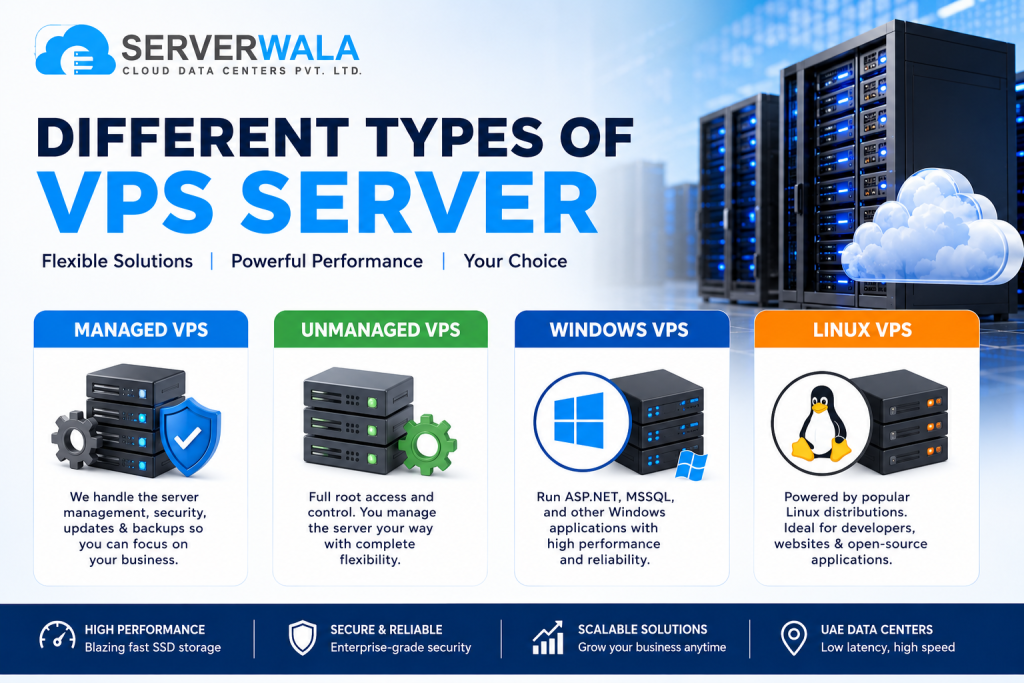
Managed VPS
If you don’t have an in-house IT team or don’t want to spend time managing server updates, security patches, backups, and monitoring, a Managed VPS can be the right choice. The hosting provider takes care of most technical responsibilities, allowing you to focus on growing your business instead of maintaining the server. This option is ideal for business owners, startups, online stores, agencies, and organizations that need reliable performance without requiring advanced server management skills. Although managed services generally cost more than unmanaged plans, many businesses find the additional support worthwhile.
Unmanaged VPS
Some businesses and developers prefer having complete control over their hosting environment. An Unmanaged VPS provides full administrative access, but the responsibility for installing software, configuring security, updating the operating system, monitoring performance, and troubleshooting issues remains with the user. This option is best suited for experienced system administrators, developers, and organizations with dedicated technical teams who want maximum flexibility and customization. It often costs less than managed hosting but requires a higher level of technical expertise.
Windows VPS
Many organizations rely on Microsoft technologies such as ASP.NET, Microsoft SQL Server, Remote Desktop Services (RDP), or other Windows-based applications. A Windows VPS is specifically designed to support these environments while providing compatibility with Microsoft software and familiar administrative tools. Businesses that depend on Windows applications often choose this option because it integrates easily with their existing infrastructure and allows them to manage business software more efficiently.
Linux VPS
A Linux VPS is one of the most popular choices due to its stability, security, and cost-effectiveness. It supports popular distributions such as Ubuntu, CentOS, Debian, AlmaLinux, and Rocky Linux, making it suitable for hosting WordPress websites, eCommerce platforms, web applications, databases, and development projects. Since Linux is open source, businesses can reduce licensing costs while benefiting from excellent performance and a wide range of server management tools. It is particularly popular among developers and organizations running PHP, Python, Node.js, or Java applications.
SSD VPS
Website speed often depends on how quickly data can be read from storage. An SSD VPS uses Solid State Drives instead of traditional hard disk drives (HDDs), resulting in significantly faster file access, quicker application loading, and improved overall performance. Businesses that experience slow page loading or database delays frequently benefit from SSD storage because it reduces waiting times and provides a smoother user experience. It is an excellent choice for business websites, blogs, online stores, and small to medium-sized applications.
NVMe VPS
As websites and applications become more demanding, many organizations require even faster storage technology. An NVMe VPS uses Non-Volatile Memory Express (NVMe) drives, which deliver much higher read and write speeds than standard SSDs. This makes them particularly suitable for high-traffic websites, large databases, SaaS applications, gaming platforms, and resource-intensive workloads. If your business relies on fast data processing or handles thousands of simultaneous requests, NVMe storage can significantly improve responsiveness and overall server performance.
Cloud VPS
Many businesses worry about running out of resources as their website grows. A Cloud VPS addresses this challenge by combining virtualization with cloud infrastructure, allowing resources to scale more efficiently when demand increases. Unlike traditional environments that depend on a single physical server, cloud-based hosting often distributes workloads across multiple systems, improving flexibility and resilience. This makes it a suitable choice for businesses with fluctuating traffic, seasonal demand, or rapidly expanding online operations.
GPU VPS
Some workloads require much more than standard CPU processing power. Applications involving artificial intelligence (AI), machine learning, video rendering, scientific simulations, cryptocurrency research, or 3D graphics often benefit from dedicated graphics processing capabilities. A GPU VPS includes powerful graphics processors designed to perform parallel computations much faster than traditional CPUs. This makes it an excellent option for developers, researchers, data scientists, and businesses working with computationally intensive applications.
High Availability VPS
Unexpected server failures can interrupt business operations and affect customer trust. A High Availability VPS is designed to minimize downtime by using redundant infrastructure, failover mechanisms, and continuous monitoring. If one component experiences a problem, another system can quickly take over, helping keep websites and applications accessible. This type of hosting is particularly valuable for banks, healthcare organizations, eCommerce businesses, SaaS providers, and enterprises that require continuous availability and cannot afford prolonged service interruptions.
Which Type of VPS Hosting Should You Choose?
The best hosting solution depends on your business requirements rather than simply choosing the most expensive plan. If you prefer expert technical support, a Managed VPS is often the most convenient option. Businesses with experienced IT teams may prefer an Unmanaged VPS for greater flexibility. Organizations running Microsoft applications generally benefit from a Windows VPS, while Linux is ideal for open-source environments and web development. If website speed is your priority, SSD or NVMe storage can significantly improve performance, while Cloud and High Availability solutions are better suited for businesses expecting rapid growth or requiring maximum uptime. By matching your hosting environment to your workload, technical expertise, and future goals, you can make a more informed investment that supports long-term business success.
VPS vs Other Hosting Solutions in the UAE
Businesses across the UAE have different hosting requirements depending on their industry, website traffic, applications, and future growth plans. A startup in Dubai may only need reliable hosting for a business website, while a growing eCommerce company in Abu Dhabi may require higher performance to handle thousands of daily visitors. Understanding the differences between various hosting solutions helps organizations choose an infrastructure that delivers the right balance of speed, security, scalability, and cost. Below is a detailed comparison to help UAE businesses make an informed decision.
VPS vs Shared Hosting
Shared hosting is often the first choice for startups because it is affordable and easy to manage. However, as businesses in the UAE begin attracting more customers, many experience slow loading speeds, limited server control, and unexpected downtime during busy periods. Since multiple websites share the same hardware resources, another customer’s activity can directly affect your website’s performance. A Virtual Private Server provides dedicated CPU, RAM, and storage, allowing your website to perform consistently regardless of other users on the same physical machine. This makes it a practical choice for businesses in Dubai, Abu Dhabi, Sharjah, and other Emirates that want faster website performance, better security, and room to grow.
VPS vs Dedicated Server
Many business owners ask whether they should invest in a dedicated server or choose a virtualized hosting environment. A dedicated server gives you complete access to an entire physical machine, making it suitable for enterprises running highly demanding applications or managing extremely large workloads. However, many businesses across the UAE don’t require an entire physical server. Virtual Private Hosting provides dedicated resources, administrative control, and excellent performance at a much lower cost. It is often the preferred solution for startups, SMEs, SaaS companies, digital agencies, and eCommerce businesses that need enterprise-grade performance without enterprise-level infrastructure costs.
VPS vs Cloud Hosting
Cloud hosting has become increasingly popular because it distributes workloads across multiple interconnected servers, allowing resources to scale automatically when demand increases. Businesses with unpredictable traffic or seasonal spikes often choose this model for its flexibility. A Virtual Server, however, offers isolated resources, predictable performance, and simpler resource management. Many UAE businesses prefer this approach because it provides stable performance, transparent pricing, and easier server administration for websites, business applications, and customer portals. The right choice depends on your traffic patterns and scalability requirements.
VPS vs Colocation
Some large organizations in the UAE prefer to purchase their own physical servers and place them inside professional data centers through colocation services. This gives them full ownership of the hardware while benefiting from enterprise-grade facilities, including redundant power, cooling, physical security, and high-speed network connectivity. For most businesses, however, purchasing and maintaining hardware can be expensive and time-consuming. VPS Hosting removes these responsibilities by allowing businesses to rent virtualized infrastructure without investing in physical equipment. This makes it a more practical and cost-effective solution for companies focused on growth rather than infrastructure management.
VPS vs Bare Metal
A bare metal server provides exclusive access to dedicated hardware without any virtualization layer. It is commonly used by enterprises running high-performance databases, AI workloads, scientific research, or applications requiring maximum processing power. For the majority of businesses in Dubai, Abu Dhabi, and across the UAE, these workloads are not necessary. A Virtual Private Server delivers dedicated virtual resources, strong security, and reliable performance while remaining easier to upgrade and significantly more affordable. It offers an excellent balance between cost and capability for growing businesses.
VPS vs Reseller Hosting
Reseller hosting is designed for individuals and agencies that want to create and sell hosting plans under their own brand. Instead of using the resources for their own websites, resellers divide hosting accounts among multiple customers. A Virtual Private Server UAE is designed for businesses that need reliable hosting for their own websites, online stores, databases, applications, or internal systems. It provides greater flexibility, administrative control, and dedicated resources, making it a better choice for organizations that prioritize performance and long-term scalability rather than reselling hosting services.
Which Hosting Solution Is Best for UAE Businesses?
There is no single hosting solution that fits every business. The right choice depends on your traffic, applications, technical expertise, and future growth plans.
- Shared Hosting – Best for personal websites and very small businesses with low traffic.
- Virtual Private Server – Ideal for startups, SMEs, eCommerce stores, SaaS platforms, and growing businesses that need dedicated resources and reliable performance.
- Dedicated Server – Suitable for enterprises requiring maximum computing power and complete hardware control.
- Cloud Hosting – Recommended for businesses with highly variable or unpredictable traffic.
- Colocation – Best for organizations that already own physical servers and require secure data center facilities.
- Reseller Hosting – Designed for agencies and entrepreneurs planning to sell hosting services.
For most growing businesses in the UAE, a Virtual Private Server offers the best combination of performance, flexibility, security, scalability, and affordability, making it a practical long-term investment for supporting digital growth and delivering an excellent customer experience.
Serverwala – Top Server Provider in Dubai
Serverwala is recognized as a trusted server provider in Dubai, delivering high-performance hosting solutions that help businesses achieve speed, security, and uninterrupted online operations. Whether you need VPS hosting, dedicated servers, cloud servers, or enterprise infrastructure, Serverwala offers reliable solutions backed by modern hardware, high-speed SSD/NVMe storage, robust network connectivity, and 24/7 technical support. With scalable server configurations, advanced security features, and flexible deployment options, businesses of all sizes can easily expand their IT infrastructure as their requirements grow. By combining powerful performance, competitive pricing, and expert support, Serverwala has become a preferred choice for organizations looking for dependable server hosting solutions in Dubai and across the UAE.
VPS Server Applications Across Different Industries
eCommerce
A VPS server provides the speed and stability required to handle online stores with high traffic and large product catalogs. Dedicated resources ensure fast page loading, secure payment processing, and uninterrupted shopping experiences. Businesses can also scale server resources during seasonal sales and promotional campaigns.
Healthcare
Healthcare organizations use VPS hosting to securely manage patient records, medical applications, and appointment systems. Reliable uptime ensures uninterrupted access to critical healthcare services. Advanced security features help protect sensitive medical data and support regulatory compliance.
Education
Educational institutions rely on VPS servers to host e-learning platforms, student portals, and virtual classrooms. High-performance hosting enables smooth video lectures, online examinations, and digital resource access. Scalable infrastructure supports growing numbers of students and educators.
Government
Government departments require secure and dependable server infrastructure for public services and digital records. VPS hosting provides enhanced security, consistent performance, and controlled resource allocation. Reliable hosting ensures uninterrupted access to citizen portals and administrative applications.
Banking
Banks and financial institutions require highly secure hosting environments for online banking, payment gateways, and financial applications. VPS servers provide isolated resources, strong security measures, and reliable performance. Continuous availability helps maintain customer trust and service reliability.
SaaS
Software-as-a-Service providers need scalable infrastructure to deliver cloud applications efficiently. VPS hosting offers dedicated resources, consistent uptime, and flexible scalability as user demand increases. It also supports smooth software deployment and regular updates.
Startups
Startups benefit from VPS hosting by gaining enterprise-grade performance without the high cost of dedicated servers. Flexible resource upgrades allow businesses to scale as they grow. Reliable hosting supports websites, applications, and development environments from day one.
Digital Agencies
Digital agencies manage multiple client websites, applications, and marketing campaigns on a single VPS server. Dedicated resources ensure stable performance across all hosted projects. Easy scalability allows agencies to accommodate new clients without infrastructure limitations.
Manufacturing
Manufacturing companies use VPS servers to manage ERP systems, production monitoring, and inventory management applications. Reliable hosting ensures continuous access to operational data and business-critical software. High availability minimizes workflow interruptions and improves efficiency.
Logistics
Logistics businesses depend on VPS servers for shipment tracking, warehouse management, and supply chain applications. Stable server performance enables real-time updates and efficient coordination between multiple locations. Reliable infrastructure supports uninterrupted logistics operations.
Hospitality
Hotels, resorts, and travel businesses host booking systems, customer portals, and reservation platforms on VPS servers. Fast website performance improves the booking experience and customer satisfaction. Scalable hosting supports increased traffic during holiday and travel seasons.
Media
Media companies require high-performance hosting for news portals, streaming platforms, and digital publications. VPS hosting delivers fast content loading and reliable performance during traffic spikes. Dedicated resources ensure seamless content delivery to audiences worldwide.
Gaming
Gaming platforms require low latency, high-speed processing, and reliable uptime for multiplayer experiences. VPS servers provide dedicated computing resources that improve gameplay performance and reduce lag. Flexible configurations support game hosting and community growth.
Forex
Forex trading platforms require ultra-low latency and uninterrupted connectivity for real-time trading. VPS hosting ensures stable server performance and faster trade execution. High availability helps traders maintain continuous access to financial markets.
AI & Machine Learning
Artificial Intelligence and Machine Learning applications require reliable computing resources for model development and data processing. VPS servers provide dedicated CPU, RAM, and storage for handling AI workloads efficiently. Scalable infrastructure supports growing computational requirements.
Real Estate
Real estate businesses host property listing websites, CRM platforms, and virtual property tour applications on VPS servers. Fast loading speeds improve user engagement and lead generation. Reliable hosting ensures uninterrupted access to listings and customer information.
Legal Services
Law firms use VPS hosting to securely manage legal documents, case management systems, and client communication portals. Dedicated resources and enhanced security help protect confidential information. Reliable uptime ensures continuous access to important legal data.
Telecommunications
Telecommunication providers use VPS servers to host customer portals, billing systems, and communication management platforms. Stable infrastructure ensures uninterrupted service delivery and efficient customer support. Scalable resources accommodate increasing user demands.
Research & Development
Research organizations rely on VPS servers for data analysis, collaborative projects, and application testing. Dedicated resources support computational tasks and secure data storage. Flexible server configurations enable researchers to scale resources based on project requirements.
Things to Consider Before Buying a VPS Server
Questions to Ask Before Buying
Before purchasing a VPS server, evaluate your business requirements, expected traffic, application needs, and future growth plans. Ask about server specifications, security features, backup policies, and management services to ensure the hosting solution matches your long-term objectives.
Features Checklist
Choose a VPS server that includes dedicated CPU and RAM, SSD or NVMe storage, full root access, strong security, regular backups, and scalable resources. Additional features such as DDoS protection, multiple operating system options, and one-click application deployment add greater value.
Support Quality
Reliable technical support is essential for resolving server issues quickly and minimizing business disruptions. Look for providers that offer 24/7 expert support through live chat, phone, email, or ticketing systems.
Uptime Guarantee
Select a VPS provider that offers a high uptime guarantee, preferably 99.9% or above, to ensure maximum service availability. Consistent uptime keeps websites, applications, and business operations accessible without interruptions.
Data Center Quality
The quality of the data center directly impacts server performance, security, and reliability. Modern facilities with redundant power, advanced cooling systems, high-speed network connectivity, and physical security provide a stable hosting environment.
Upgrade Options
As your business grows, your VPS server should allow seamless upgrades for CPU, RAM, storage, and bandwidth without major downtime. Flexible scalability ensures your infrastructure can support increasing workloads and future expansion.
Conclusion: Choose the Right VPS Server for Your Business
Choosing the right VPS server is a crucial step toward building a fast, secure, and scalable online presence. Instead of focusing only on price, businesses should carefully evaluate server performance, security features, uptime guarantees, scalability, data center quality, and technical support to ensure long-term reliability and growth. Whether you’re running a startup, eCommerce store, enterprise application, or business website, investing in a high-quality VPS solution can significantly improve performance and customer experience. If you’re looking for a trusted hosting partner, Serverwala VPS Server offers powerful infrastructure, enterprise-grade security, flexible scalability, and 24/7 expert support to help your business succeed. Explore Serverwala’s VPS hosting solutions today and choose a server that grows with your business.